

RED-Play Review
- Sep 24, 2024
- 4 min read






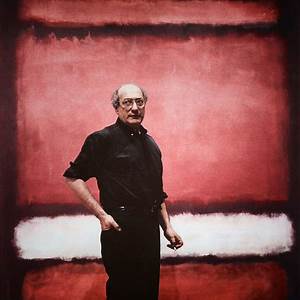


In 1961, playwright John Logan wrote the play RED, centered on painter Mark Rothko in the 1950s. During this period, one of the most popular painting styles was abstract expressionism, for which Rothko was known. However, it was also a time of immense change in the art world, as many other art practices like pop art began to emerge alongside abstract expressionism. Being aware of the context of this period allows viewers to better comprehend the play and the author's objectives. John Logan created the play to provide insight into the mind of artists, specifically Mark Rothko. The play explores what art is or should be, the relationship between an artist and his creations, and the struggles concerning the fear of change.
RED belongs to the drama genre, as Rothko equates black and red to death and life. The play focuses on a specific time in Mark Rothko's life when he created a series of art pieces for the Four Seasons Restaurant in New York City. Concurrently, Rothko took on a young new assistant named Ken. One of the first questions Mark asked Ken about a painting he was working on was, “What do you see?” Confused and nervous, Ken responds thoughtlessly, “Red…”
Throughout the development of the play, these two characters engage in heated and intellectual conversations about art and colors entailing a deeper meaning behind those colors. For instance, Ken argues that it is sentimental, romantic, and an old-fashioned notion to equate black with death; he asserts that black is a tool in reality, like any other color, and has no inherent effect. Rothko becomes defensive and knowing Ken's past says, “What about relating white to death and snow?” Ken replies that this is different, as it is a personal reaction based on his experience of finding his murdered parents on a snowy day.
These conversations often circle back to the color red and black— life and death. Ken argues that it is cliché for a painter to grow older and have the color black increasingly infuse his work, implying depression, fear of death, losing touch, losing relevance, and saying goodbye. Ken also argues that artists must remain true to themselves, even on their deathbeds, referencing Matisse and Van Gogh. Ken points out that Mark claims he searches for real human beings who can look at his pictures with compassion, but in his heart, he no longer believes these people exist, leading him to lose faith and hope; consequently, black taking over red in his paintings.
In addition, Mark and Ken also discuss Mark’s decision to display his paintings in the Four Seasons Restaurant for a good amount of money, questioning whether it is the best place to appreciate his art. Rothko wonders if his paintings will ever forgive him for that. Fortunately, toward the end of the play, he calls the Four Seasons Restaurant to inform them that he will be sending back the money but will not be sending his paintings.
In the final scene, Mark fires Ken, telling him to "make something new." He didn’t fire him because he thought Ken was bad or useless, but because he saw all the youth and potential in him. Mark had already taught him everything he knew, and he wanted Ken to make a name for himself. Before Ken leaves, Rothko asks him one last time, "What do you see?" Ken responds with certainty, "Red." This is powerful because it's one of the very first questions Mark asked Ken, and while Ken gives the same answer, he now says it with confidence, symbolizing and inspiring Mark to choose life and passion, over his depression and fears.
Even though a set and script can be very detailed and well-prepared, the success of a play ultimately depends on the actors' performances. Casting director Anne McNulty selected two amazing actors who vividly and naturally portrayed Rothko and Ken. They reacted with genuine emotion and a sense of realism to their actions, as if they were listening and responding to each other in real time. They made several physical choices that enhanced their roles as actors, using different parts of their bodies as instruments to tell the story. For example, their constant movement throughout the small studio—using the music box, painting the canvas, mixing paint, and cleaning—demonstrated this dynamic engagement.
Although there are many new stories and plays today regarding artists and their struggles with identity, mental health, change, and recognition, RED remains relevant. Mark Rothko was one of the most prominent post-World War II modernist painters. His ideas inspired many other artists, making it fitting to examine his voice. Many contemporary artists, like Rothko, battle depression, fear of change, identity, and recognition and artists of all kinds—painters and musicians alike—can relate to this story in a world where trends shift rapidly before creators can leave their mark.
In conclusion, RED is an intense and emotional play about a passionate painter whose heart, body, and soul are consumed by the clash between life and death, symbolized in his canvases by the battle between red and black. The play does a marvelous and thought-provoking job of depicting a pivotal period in Mark Rothko’s life. We see Rothko struggle not to let black dominate his palette or his life; he must remain true to himself through the color red. I would recommend this play to anyone—viewers don’t necessarily need to be interested in art or have prior knowledge of art or artists to understand, enjoy, or relate to the story.
Snippet of Play "RED"
Full "RED" Play


Comments